How AI Employees are Replacing Traditional Call Centers

Customer expectations for support have never been higher. They want instant, accurate answers, 24 hours a day, 7 days a week. Traditional call centers, plagued by high turnover, lengthy training cycles, and soaring labor costs, simply can't keep up with this demand. The result is a widening gap between what customers expect and what businesses can realistically deliver — and that gap is costing companies billions in lost revenue and brand equity every year.
The transition from human-centric support to AI-first support is no longer a luxury — it's a survival requirement. In 2026, a 5-minute wait time is considered a failure. Customers who encounter hold times will hang up, leave a negative review, and find a competitor who answers immediately. The tolerance for friction has reached zero.
The Economics of Traditional Call Centers Are Broken
Let's look at the raw numbers. The average fully loaded cost of a single full-time call center agent in the United States is between $65,000 and $85,000 per year when you include salary, benefits, training, turnover costs, and infrastructure. The average annual turnover rate in a traditional call center is 30-45%. That means you're effectively re-hiring and re-training nearly half your support team every year — an enormous drag on productivity and institutional knowledge.
Meanwhile, customer contact volumes are increasing, not decreasing. The proliferation of digital channels has created a customer who expects support via phone, SMS, email, social media DM, and live chat simultaneously. Staffing for omnichannel availability around the clock is economically impossible for most businesses below enterprise scale.
AI employees break this equation entirely. A single AI agent can handle an unlimited number of simultaneous conversations across all channels, 24/7/365, with zero incremental cost per additional interaction. The capital expense is fixed. The capacity is infinite.
The Cost Comparison That Changes Everything
When we look at the data side by side, the choice becomes obvious. A well-configured AI support agent on AIO Portal costs a fraction of a single human agent while providing zero wait times, infinite scalability, and perfect consistency across every interaction.
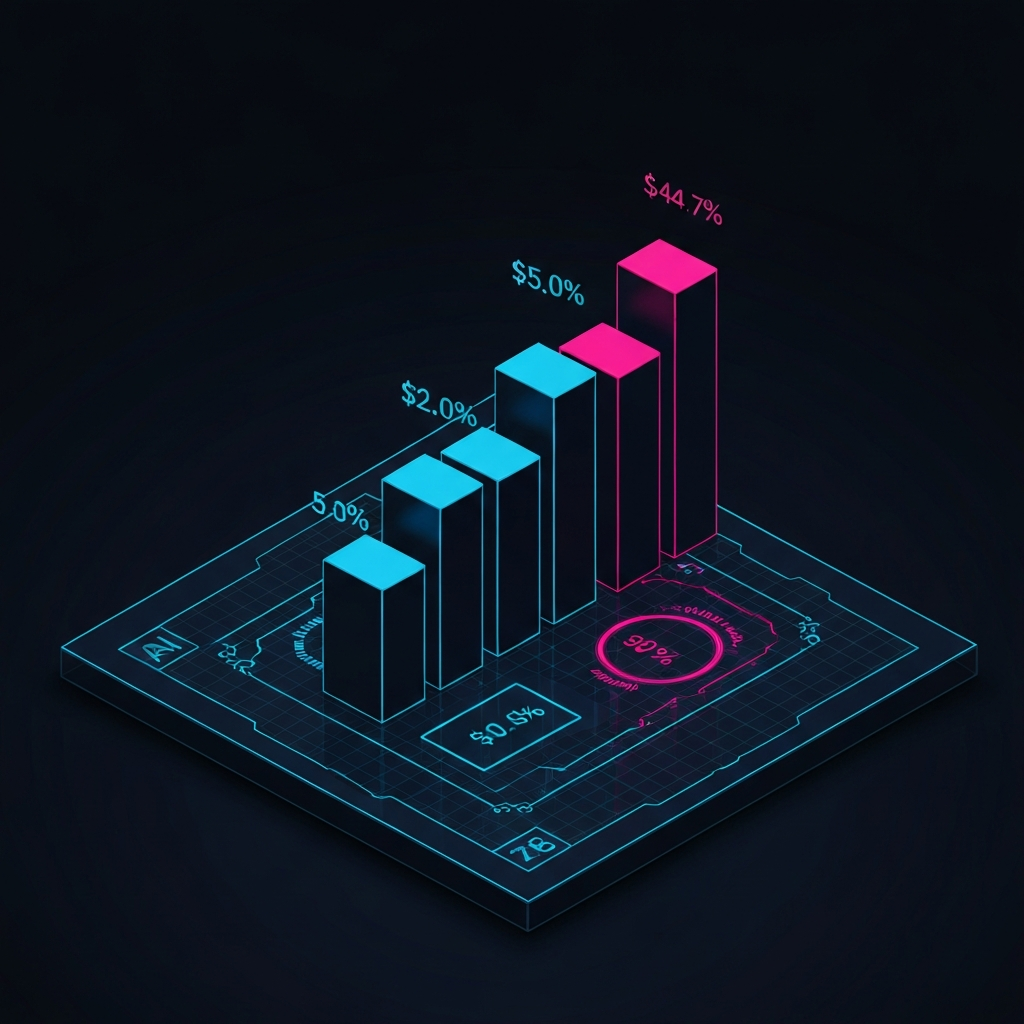
Figure 1: Operational Cost Reduction — AI Employees vs. Traditional Staffing.
A typical mid-size business running a 10-person support team spends approximately $750,000 per year on that function. Transitioning to an AI-first model with human oversight for escalations reduces that cost to under $100,000 — an 87% reduction. The savings alone fund significant investment in growth, product development, or sales capacity.
Beyond direct labor costs, consider the indirect savings: zero HR overhead for the support function, elimination of training materials and onboarding programs, no sick days or holidays, and no performance management burden. The total economic impact of AI support is far larger than the labor line item alone.
How AI Voice Agents Are Transforming Phone Support
The area where AI is having the most dramatic impact on traditional call centers is voice. For years, interactive voice response (IVR) systems were the bane of customer experience — robotic menu trees that frustrated callers and rarely resolved anything. The new generation of AI voice agents is categorically different.
Modern AI voice agents powered by large language models can hold natural, flowing conversations. They understand context across the entire conversation, handle interruptions gracefully, respond to nuanced questions, and take real actions — pulling up account information, processing returns, updating records, and scheduling appointments — in real time. The experience is indistinguishable from speaking with a knowledgeable human representative.
AIO Portal's Voice AI agent, Chloe, exemplifies this capability. She handles inbound calls with a conversational warmth and competence that drives customer satisfaction scores consistently above the industry benchmark for human agents. More importantly, she never puts a caller on hold, never has a bad day, and is available the moment the phone rings regardless of time, day, or call volume.

Figure 2: AI Voice Agents in 2026 — Natural Language, Real Actions, Zero Hold Times.
The Hybrid Intelligence Model: The Ideal Human-AI Collaboration
The most successful implementations of AI support don't aim for 100% automation. They use what we call the Hybrid Intelligence Model: AI handles the high-volume, repeatable 80% of interactions autonomously, and seamlessly transfers the complex, emotionally sensitive 20% to human specialists — complete with full conversation context and AI-generated sentiment analysis.
This model is critical for two reasons. First, it dramatically elevates the quality of human interactions. Your human agents no longer spend their day answering "What's my order status?" — they handle genuinely complex issues that require empathy, judgment, and creative problem-solving. Job satisfaction soars, and so does the quality of complex resolutions. Second, it provides an essential safety net for high-stakes situations where human judgment remains irreplaceable.
The key to a successful hybrid implementation is the handoff. The AI must transfer context seamlessly — the customer should never have to repeat themselves. AIO Portal's platform ensures that when an AI agent escalates to a human, the agent receives a real-time brief including the customer's history, the issue summary, the sentiment score, and a suggested resolution pathway. The human picks up exactly where the AI left off, with full context, in seconds.
Measuring AI Support Performance: The Metrics That Matter
Deploying AI support without rigorous measurement is a missed opportunity. Here are the KPIs you should track from day one to quantify the impact and identify optimization opportunities:
- First Contact Resolution Rate (FCR): The percentage of issues resolved in a single interaction without requiring escalation or follow-up. AI consistently achieves FCR rates of 75-85% for routine inquiries.
- Average Handle Time (AHT): AI typically resolves routine inquiries 60-70% faster than human agents, primarily by eliminating dead air, lookup time, and typing delays.
- Customer Satisfaction Score (CSAT): Despite skepticism from some quarters, AI support consistently scores 4.1-4.6 out of 5 in CSAT surveys — on par with or exceeding human agent benchmarks.
- Cost Per Resolution: The definitive ROI metric. Track the total cost of your support function divided by total resolutions. AI should reduce this by 70-90% within 90 days.
- Escalation Rate: The percentage of AI conversations that require human intervention. A well-tuned AI support agent should escalate fewer than 20% of interactions.
Implementation Guide: Deploying AI Support in 30 Days
The most common objection to AI support adoption is complexity — "Our business is too unique, our support too nuanced for AI." This is almost always false. Here's a realistic 30-day deployment timeline:
Week 1: Audit and Prioritize
Pull your support ticket data from the last 90 days and categorize every inquiry type by volume and resolution complexity. You will almost certainly find that 70-80% of your tickets fall into 10-15 repeatable categories. These are your Day 1 AI deployment targets.
Week 2: Configure and Train
Using AIO Portal's AI agent builder, configure your agent with your brand voice, product knowledge base, and resolution playbooks for each of the top inquiry categories. Connect it to your order management, scheduling, and billing systems to enable real-time action.
Week 3: Supervised Launch
Deploy the AI agent in "shadowed" mode — it handles conversations, but a human reviews every resolution before it's sent. This identifies gaps in training data and edge cases quickly, without risk to the customer experience.
Week 4: Full Deployment and Optimization
Flip to autonomous mode for high-confidence inquiry categories. Review escalation transcripts daily for the first two weeks to identify and address any remaining gaps. By day 30, your AI agent should be handling the majority of support volume independently.
The Future of Customer Support: What's Coming Next
The current state of AI support, impressive as it is, represents just the beginning. The next wave of capabilities will include proactive support — AI agents that detect potential issues before a customer even contacts you, reach out preemptively with solutions, and prevent negative experiences from occurring at all. Imagine an AI that notices a shipment delay in your fulfillment system, automatically contacts the affected customers, explains the situation, offers a discount on their next purchase, and adjusts the expected delivery date in their order record — all without a single human touchpoint.
Emotional intelligence is also advancing rapidly. The next generation of AI agents will dynamically adjust their communication style based on real-time sentiment analysis, becoming more formal with frustrated customers, more casual with relaxed ones, and more empathetic with upset ones. This level of adaptive communication has previously been the exclusive domain of expert human agents.
Key Benefits of AI Support in 2026
- Instant Response: Zero queue times for every customer, regardless of volume or time of day.
- Perfect Memory: AI agents remember every previous interaction, preference, and complaint across every channel.
- Multilingual Support: Communicate with customers in 50+ languages natively, without translation delays.
- Infinite Scalability: Handle Black Friday volumes and 2 AM inquiries with identical performance.
- Consistent Quality: Every customer receives the same high standard of service, regardless of agent mood, fatigue, or tenure.
- Zero Turnover Cost: No recruiting, onboarding, or training cycles. The AI improves continuously without human HR involvement.

Will Porter
Founder, CEO & AuthorWill is the visionary behind AIO Portal, dedicated to helping businesses scale seamlessly through autonomous AI, agentic workflows, and next-gen automation systems.