The Rise of Agentic Workflows in 2026

The landscape of business automation has shifted dramatically. We are no longer just triggering simple actions based on basic conditions; we have entered the era of Agentic Workflows. This paradigm shift represents the single most important evolution in enterprise software since the cloud, and businesses that fail to adapt will find themselves structurally disadvantaged within 24 months.
In 2026, the distinction between a "chatbot" and an "agent" has become the defining factor in business success. While chatbots answer questions, agents execute outcomes. They are the cognitive engine of the modern enterprise — capable of planning, tool use, memory retrieval, and iterative self-correction without a human in the loop.
What is an Agentic Workflow?
Unlike traditional linear automations, agentic workflows involve AI systems that can plan, reason, and execute multi-step tasks autonomously. They can handle errors, ask for clarification, and adjust their strategy on the fly. Think of it this way: a traditional automation is a script. An agentic workflow is an employee with judgment.
Consider a real-world example. A conventional "lead nurture" automation might send a follow-up email after 3 days. An agentic workflow, by contrast, would analyze the lead's LinkedIn activity, research their company's recent press releases, identify a specific pain point from their website, and craft a hyper-personalized outreach message — all without any human involvement.
The architecture enabling this leap forward relies on three key components: a large language model (LLM) as the reasoning core, a set of "tools" the agent can invoke (APIs, databases, web search), and a memory system that maintains context across sessions. When these three pillars are orchestrated correctly, the result is an AI system that behaves less like software and more like a subject matter expert.
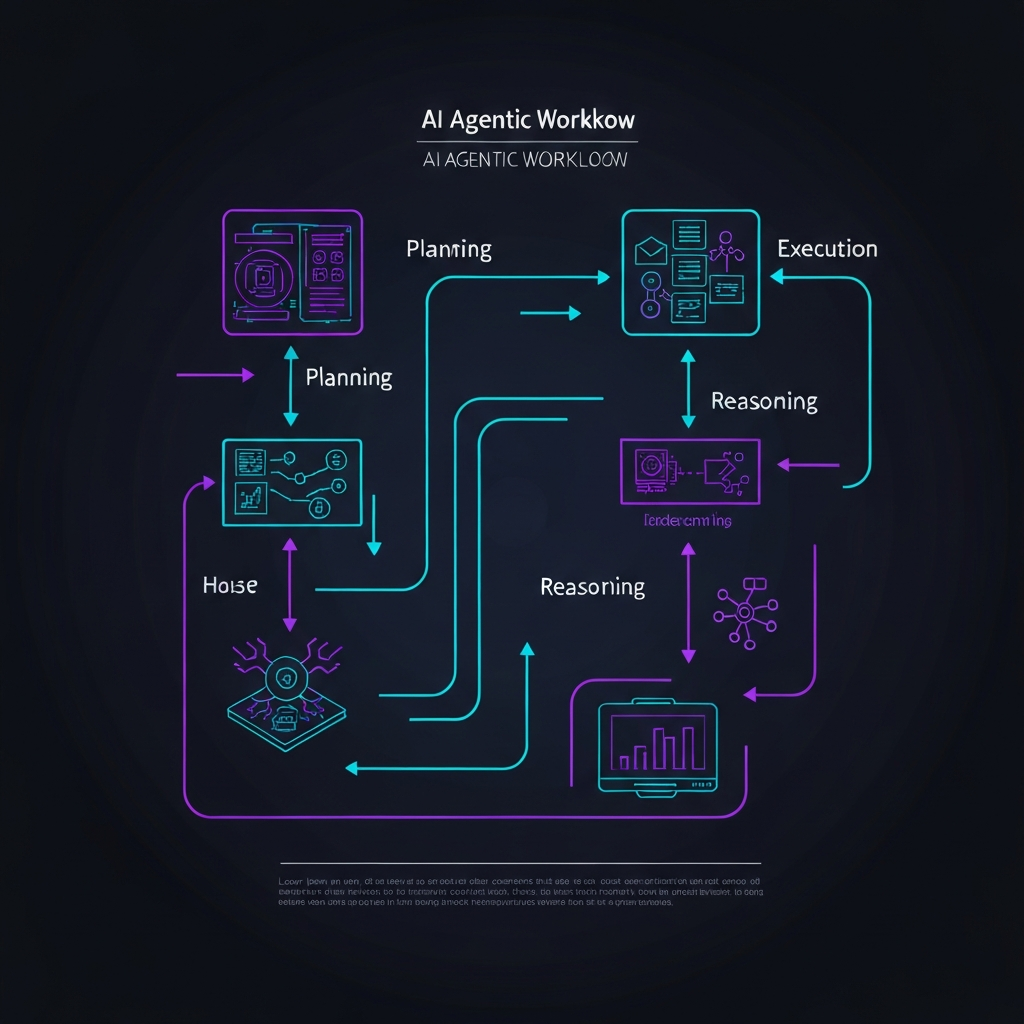
Figure 1: The Autonomous Execution Loop — Planning, Reasoning, and Deployment.
The Business Case: Why Agentic Workflows Drive Exponential ROI
Businesses implementing agentic systems are seeing a 300% increase in operational efficiency within the first six months. By delegating cognitive tasks to AI, human employees are freed to focus entirely on high-leverage relationship building, strategy, and creative work — the areas where humans still hold an irreplaceable edge.
A mid-size marketing agency recently shared their results after deploying agentic workflows for client reporting: what previously took a team of four analysts three full days every month now completes overnight with zero human involvement. The 72-hour crunch became a zero-touch process. Their team now uses those reclaimed hours to develop new service offerings, which directly contributed to a 40% increase in client retention.
"The goal isn't to replace humans, but to give every human a team of specialized AI agents that handle the friction of operation. When friction disappears, velocity becomes your competitive moat."
The financial math is compelling. If an agentic workflow saves 20 hours of labor per week at an average loaded cost of $45/hour, you are recovering $900 per week — over $46,000 annually from a single workflow. Most businesses have dozens of processes ripe for this transformation.
The Five Layers of an Agentic System
Understanding the architecture helps you identify where to apply agentic workflows in your own business. Here are the five functional layers that make up a production-grade agentic system:
- Perception Layer: The agent ingests data — emails, CRM records, web pages, calendar events, form submissions — and converts unstructured information into structured context it can reason about.
- Reasoning Layer: The LLM core analyzes the input, breaks down the goal into sub-tasks, and determines the sequence of actions required to achieve the objective.
- Memory Layer: Short-term memory (the active conversation) and long-term memory (a vector database of past interactions and knowledge) allow the agent to personalize responses and avoid repeating work.
- Action Layer: The agent executes — sending emails, updating CRM fields, booking calendar appointments, triggering webhooks, or calling external APIs.
- Evaluation Layer: After each action, the agent assesses the result against the intended outcome and adjusts its approach if the initial strategy didn't achieve the desired result.
High-Impact Use Cases Already Delivering Results in 2026
Agentic workflows are not theoretical. They are live, in production, and generating measurable business outcomes across industries right now. Here are the use cases delivering the highest ROI:
AI Sales Development Representatives (SDRs)
An AI SDR agent monitors your CRM for new inbound leads, researches each prospect across LinkedIn, their company website, and recent news, then crafts and sends a personalized first-touch email within seconds of the lead entering your pipeline. It tracks opens and clicks, automatically follows up with a tailored second message if there's no response in 48 hours, and books a calendar appointment directly when the prospect responds positively. Human SDRs only engage once a meeting is confirmed.
Intelligent Customer Support Resolution
Rather than just answering FAQ questions, an agentic support system can actually resolve issues. It logs into your fulfillment system, checks order status, initiates a replacement shipment, applies a discount code, and sends a branded confirmation — all within a single customer conversation, without escalating to a human agent.
Autonomous Financial Reconciliation
Agentic workflows can cross-reference invoices, payment records, and bank statements, flag discrepancies, and automatically generate exception reports for your accounting team. The process that previously required a dedicated bookkeeper running manual spreadsheet comparisons now happens nightly at zero marginal cost.

Figure 2: AIO Portal's visual agentic workflow builder — deploy complex multi-step agents without code.
Common Pitfalls and How to Avoid Them
The excitement around agentic AI is real, but poorly implemented agents can cause significant damage — sending embarrassing emails, making incorrect decisions, or failing silently in ways that are hard to detect. Here are the most common implementation mistakes and how to prevent them:
No Human-in-the-Loop Checkpoints
Not every decision should be fully automated. High-stakes actions — sending a legal notice, issuing a refund above a certain threshold, or communicating during a PR crisis — should require human approval before execution. Design your agents with configurable "pause and confirm" steps for consequential actions.
Insufficient Guardrails
Without clearly defined constraints, agents can hallucinate, take unintended actions, or go into infinite retry loops. Always define explicit success criteria, maximum retry limits, and fallback behaviors for edge cases.
Underinvesting in Prompt Engineering
The quality of an agent's output is directly proportional to the quality of its system prompt. Investing time in detailed role definitions, behavioral constraints, and output format specifications pays enormous dividends in reliability and consistency.
Building Your Agentic Roadmap: A Practical Framework
Implementing agentic workflows is a journey, not a one-time project. The following framework will help you prioritize and sequence your investments for maximum impact:
- Audit for Cognitive Bottlenecks: Map every process in your organization and tag any step that requires a human to read, interpret, decide, and then act. These are your prime candidates for agentic automation.
- Rank by Volume × Time × Cost: Prioritize workflows that run frequently, consume significant time per execution, and involve high-cost labor. A process that takes 30 minutes and runs 50 times a day is worth far more to automate than one that takes 3 hours but runs once a month.
- Start with a Supervised Agent: For your first deployment, implement a human-in-the-loop agent that recommends actions for a human to approve. This builds organizational trust and catches edge cases before you flip to full autonomy.
- Measure Ruthlessly: Track error rate, time-to-completion, cost-per-execution, and outcome quality before and after deployment. These metrics justify further investment and identify improvement opportunities.
- Scale Horizontally: Once a workflow is proven in one department, look for identical or similar processes in other parts of the organization. The marginal cost of replicating a working agentic workflow is near zero.
The Competitive Landscape: Early Movers vs. Late Adopters
History is clear on what happens during major technology transitions. Companies that adopted cloud computing early in 2008 built structural cost advantages their competitors couldn't overcome. Companies that adopted social media marketing early in 2010 captured audiences that never transferred to late entrants. Agentic AI is 2026's equivalent inflection point.
The window for first-mover advantage is not infinite. As agentic capabilities become commoditized over the next 18-24 months, the differentiator will shift from "do you have agents?" to "how well-trained and deeply integrated are your agents?" Organizations building their agentic infrastructure today are accumulating institutional knowledge — agent training data, refined prompts, workflow patterns — that will compound over time into an irreproducible competitive advantage.
The businesses that wait until agentic workflows are "mainstream" will find themselves not just behind the curve but structurally unable to catch up, because the gap will not be in technology access — it will be in the years of operational data and refinement their competitors have already accumulated.
Getting Started with AIO Portal's Agentic Workflows
AIO Portal's native agentic workflow builder allows you to deploy production-grade agents through an intuitive visual interface — no code required. Our pre-built agent templates cover the highest-ROI use cases out of the box, including AI SDR sequences, customer support resolution flows, and automated reporting pipelines. Each template is backed by battle-tested prompt engineering developed across thousands of real-world deployments.
The platform's deep CRM integration means your agents operate with full context — every interaction, every note, every deal stage — ensuring that automated actions are always aligned with your current business state. When an agent books an appointment, updates a contact record, or sends a communication, it flows seamlessly through your existing pipeline with complete auditability.
Implementation Checklist for 2026
- Identify multi-step cognitive bottlenecks (e.g., lead research + custom outreach).
- Deploy a reasoning engine (Agentic AI) rather than a simple trigger-action flow.
- Establish human-in-the-loop checkpoints for high-stakes decisions.
- Define explicit success criteria and guardrails for every agent.
- Measure performance with quantitative KPIs before and after deployment.
- Scale proven workflows horizontally across departments.
- Invest in prompt engineering to maximize agent reliability and output quality.

Will Porter
Founder, CEO & AuthorWill is the visionary behind AIO Portal, dedicated to helping businesses scale seamlessly through autonomous AI, agentic workflows, and next-gen automation systems.